
“Memory pills” was the phrase the New York Times used in 2003 to describe the work of Helicon Therapeutics, a Long Island biotech start up based on the work of CSHL scientists Tim Tully and Jerry Yin. Yin, Tully and their collaborators had determined that they could induce the quick formation of long term memory in Drosophila melanogaster (fruit flies). One of the genes involved had analogs in mammals, including humans, and it seemed that the path to a memory enhancement drug for people would be relatively straightforward. The goal was not to give everyone a photographic memory. Rather, the idea was more modest and more practical. If the idea worked, the drug would allow people to remember information after only one exposure rather than several. It would speed up learning and retention — a huge boon for people suffering from memory problems.
But the story of Helicon Therapeutics is not just about the biochemistry of memory, or the ins and outs of drug development. It’s also a story about the role of hype in science and the commercial application of research. Hype is often used pejoratively. It implies an element of manipulation, of talking something up in order to deceive other people. But hype — or maybe a better term here is highly optimistic enthusiasm — has a role to play in scientific research.
*
What is memory? How does it work? When you form a memory, what happens? What is the difference between short term and long term memory? Or between muscle memory, like tying your shoes, as opposed to factual recall — remembering that Paris is the capital of France? Philosophers and scientists have puzzled over this question for centuries. But it is only within the last few decades that we have gotten close to a concrete answer.
Until the 1970s, the dominant models of memory were psychological rather than biochemical or genetic. Both life scientists and social scientists were skeptical about whether it was possible to model and study memory on the molecular level. Things began to change as geneticists working with Drosophila (fruit fly) found specific genes associated with memory, but it took some time for the genetic approach to studying memory to gain traction. Although Drosophila had been used as a model organism in genetics for decades, it was not clear whether using them to understand memory was a productive route to take, or whether anything that researchers found via such study would be applicable to humans.
Tim Tully, geneticist and co-founder of Helicon Therapeutics, was among the early adopters of Drosophila as tool for the study of memory. He argues that “Drosophila’s contribution to learning and memory has never been recognized. In fact, what happened in the past, and I cynically called it vertebrate chauvinism, is that everyone working on mammalian models of learning and memory knew everything that we were publishing in Drosophila, and we were usually a little ahead of them with the tools and the insight that comes from the tools. Then five years later, they would get around to having similar tools, and then they would publish without any acknowledgment of the past contributions of Drosophila.”
By the 1980s, the use of genetics and neuroscience to study memory was becoming standard. It was out of this new direction in memory research that the science behind Helicon Therapeutics took shape. As is the case with most scientific insights, the discovery that prompted the founding of Helicon was the result of research done by many different people over a period of many years.
One important figure in this web of scientific work was neuroscientist and Nobel Prize winner Eric Kandel, whose work showed that a molecule called cyclic AMP (cyclic adenosine monophosphate, or cAMP) plays an important role in the formation of memories. Kandel’s work was done on Aplysia, a type of sea slug, which has large neurons that make it a good experimental organism for neuroscience. Aplysia is not as useful for genetic studies as it is for neuroscience, however, because of certain characteristics of its genome.
Molecular biologist Seymour Benzer, in contrast, took what Jerry Yin describes as the “traditional Drosophila route,” which was to design a behavioral assay for learning and memory and look for flies with genetic mutations that affected the process he was studying (a behavioral assay is an experimental setup that tests an animal’s response to specific stimulus). Benzer’s work led to evidence of associative learning and, subsequently, the discovery of some of the first genes connected to learning and memory in fruit flies. A student of Benzer’s, William “Chip” Quinn, continued investigating the molecular basis of memory through genetic work with Drosophila; both Tim Tully and Jerry Yin worked with Quinn early in their careers.
But what was the next step? Jerry Yin describes coming out of a symposium at the Whitehead Institute (in Cambridge, Massachusetts) with an insight. At the time, Jerry was still working in Quinn’s lab, and one of the things that was frustrating him was that “there were no molecules. It was hard to make that link as to what molecules might be important in those cells that are part of the circuits that are important to memory function.”
The Whitehead symposium that Jerry had just attended was on immediate early genes. What are these? “This was a paradigm in molecular biology then where if you take tissue culture cells and you starve them, they stop growing and they are in this quiescent state. Now if you add serum and feed them, they immediately turn on a suite of genes called the immediate early genes, and these genes then turn on other genes. There’s this whole cascade of gene expression that occurs to allow the cell to move” back out into normal cell activity.
What happened at the Whitehead symposium was that the presentation of two scientists from the Roche Institute caused Jerry to make a connection between this characteristic of immediate early genes and the mechanisms of memory. The two scientists from the Roche Institute had evidence that immediate early genes were activated right after neurons fire. Jerry had done significant work on gene regulation and transcription factors and had an ‘aha’ moment. “This is how I should think about long term memory.” The wave of transcriptional activity was key.
Several other pieces of information played into this idea. It was already known from work in rats that if transcription or translation in the brain were blocked, this interfered with memory formation. Specifically, blocking transcription or translation blocked the formation of later or longer-term memory. It appeared that in the case of the rats, the brain had a temporary memory faculty that did not require new proteins to be created in order to work, but longer term memory required that cascading process of transcription and translation.
What Jerry realized as a result of what he heard at the Whitehead symposium was that these immediate early genes that were activated when neurons fired, and which set off a process of protein creation, were connected to what was already known about transcription, translation and memory in rats. “This was the way” to approach the problem, “the molecular entry point into long-term memory.”
But what proteins were involved? Jerry knew from the work of Kandel and others that a transcription process responsive to cyclic AMP was involved in memory formation, although at that point it wasn’t yet clear how it was involved.
Another piece of the puzzle came from a scientist at Massachusetts General Hospital, Marc Montminy, who was working with liver cells. This work had nothing to do with memory, but proved to be highly relevant nevertheless. He had identified the transcription factor CREB “as the major downstream effector when cyclic AMP levels change.” A transcription factor is “a protein that controls the rate of transcription of genetic information from DNA to messenger RNA by binding to a specific DNA sequence. The function of transcription factors is to regulate genes — switch them on and off — in order to make sure that they are expressed at the right time and in the right amount” for the activity that the cell is engaged in. [Wikipedia] Transcription factors are coded for by specific genes, and when these genes are switched on or off, and more or less of the transcription factor itself is produced, this controls the activity of the genes that the transcription factor itself regulates. (We will hear later about a ‘CREB’ gene, which is the gene that codes for the CREB transcription factor.)
Knowing that cyclic AMP was related to memory formation, and that CREB controlled levels of cyclic AMP, Jerry — who was still working in Chip Quinn’s lab at the time — was able to find the Drosophila version of the CREB gene. This gene appeared to be the entry point into the molecular mechanism of memory formation.
Meanwhile, Tim Tully was working on the same problem from a different direction, creating specific memories in flies and looking for the genes that furthered or disrupted this process. The work was significant because Jerry and his colleagues had noticed that Tim’s training paradigm for flies was producing much longer-lasting memory; they were doing something different and getting a very useful result.
In the end, Tim and Jerry combined their work in a collaboration at CSHL. Jerry had Drosophila with an alteration in the CREB gene, and Tim brought in a training paradigm that produced long-lasting memories in the flies — of precisely the type that fiddling with the CREB gene was likely to disrupt, if the model was correct.
The collaboration was a success. Jerry, Tim and their colleagues published two highly cited papers in Cell. It was already known that there were two distinct components of memory in Drosophila. One was long term memory (LTM), which could be disrupted by cycloheximide, a naturally occurring fungicide that interrupts protein synthesis. The other, anesthesia-resistant memory (ATM) was, as the name indicates, resistant to anesthesia, as well as to cycloheximide. The first of the two Cell papers, published in 1994, described how the researchers had determined that CREB genes were very likely involved in the cascade of gene expression necessary to the formation of long term memory. But precisely how these genes did this was still unclear. The second Cell paper, in 1995, offered a more detailed description of how “CREB might act as a molecular modulator of LTM in many species and tasks.” CREB was part of a fairly complex system of activators and inhibitors that, as a whole, regulated the cascade of transcription necessary for the formation of LTM, turning it on and off as necessary. The exciting thing about this paper was that they were able to manipulate this machinery in flies such that the wave of transcription required for LTM formation was being pushed to happen and the normal brakes were not applied. As a result, they ended up with flies who formed “maximum LTM” relating to a stimulus after only one training session — typically it took many.
The work of other researchers showed that there was a CREB gene in all mammals, and that there was a second, closely related gene, CREM, which was part of the same LTM-regulating system. In the end it emerged that mammals have not one gene in this family, or two, but rather three. These genes work together to perform the same functions that CREB does on its own in Drosophila, although precisely how they work together is not yet known.
Confirmation that the same system, more or less, was at work in mammals, was a big turning point. Knowing that from Drosophila, to “mouse, to human” the genes are “almost totally conserved,” made it clear that there was potential for drug development in this research. Suddenly all kinds of people were interested the work. Jerry described the “hoopla” that followed the news of the results. “I’m talking about Sunday New York Times Magazine articles, Popular Science. You turn on the radio and they’re talking about this experiment in flies.”
This was what pushed him, Tim and several other collaborators to found Helicon Therapeutics. A significant amount of their funding came from the Swiss pharmaceutical company Roche. “It became clear that they were interested and so there were a number of dog and pony shows organized to go to Basel, Switzerland, where their neuroscience of research occurred…We interacted with basic scientists, we had to convince … the decision-makers at Roche that this was worth doing. The initial funding came from Roche and that was very lucrative. There was a lot of money that flowed.”
What were Roche’s expectations for the arrangement with Helicon? “The way this dance occurs, is, of course, the people with the money have certain priorities. There’s interest in certain things. Roche being a pharmaceutical company is interested in large drug screens. Based on this transcription factor [i.e. CREB].” Activating this transcription factor or activating it longer. “That was the goal.”
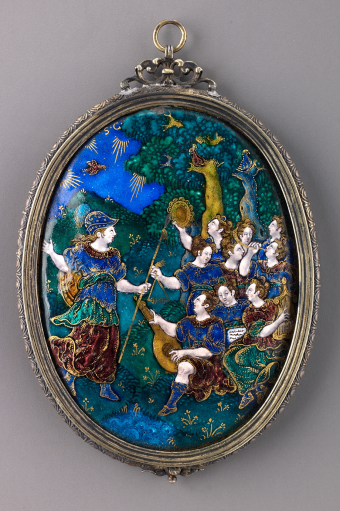
What is behind the company’s name? Co-founder Tim Tully explains: “Helicon was the mountain in Greek mythology where Apollo played with the Muses,” who “were the daughters of the Titan goddess Mnemosyne, the goddess of memory.”
Tim Tully, who handled most of the investor side of the enterprise, recalls the details. Having the funding from Roche was far from the end of the process, in terms of bringing a product to market. And in fact, after a few years, Roche began to express skepticism about the company’s prospects. Roche was the primary source of Helicon’s funding, and a few years in, when it was time to renew their agreement, “Roche declined,” probably because “they didn’t see [the project] going where they wanted fast enough.” In addition, not everyone at Roche had been enthusiastic about Helicon in the first place. Tim recalls one person at Roche in particular who was in charge overseeing the project and it was more than evident that he “did not like that project, and he was openly, aggressively critical of it at every quarterly progress meeting we had with them.” The root of the dislike was, in Tim’s opinion, that he “was a vertebrate chauvinist.” That is, he had no “appreciation at all for flies,” and thought the entire project was premature.
In a way, this about-face on Roche’s part didn’t come entirely out of the blue. Helicon had initially sought funding from other companies before making an agreement with Roche. Tim remembers that “in the [pharmaceutical] industry, the skepticism came through in many, many ways. We gave pitches to…all the major pharma companies, and all of them said rightfully, they said, ‘That’s a really interesting discovery, [but] it’s a little bit too early for us.” Roche was willing to make a gamble that some other large pharma companies were not, but in the end they too decided that the investment wasn’t going to work out for them.
Without the funding from Roche, Helicon was on thin ice, financially. Tim relates that “we burned through our remaining money pretty quickly, started taking loans from Cold Spring Harbor and OSI Pharmaceuticals [formerly Oncogene]. Finally, we couldn’t find any investors.” At this point Ken Dart, later of Dart Neuroscience, “stepped forward and offered to put in” a substantial sum of money. “We got some other investments too…With that and Dart, we made the survival jump. It was at that point that…we moved to a biotech incubator park [at SUNY Farmingdale] on Long Island which was right next to OSI Pharmaceuticals.”
What came out of the enterprise, after several years, was a type of drug called a phosphodiesterase inhibitor. CREB, the transcription factor produced by the CREB gene, is a protein. It needs to be activated in order to perform its function. It needs to be modified in order to become active and transcribe downstream genes. The modification involves the attachment of a phosphate to a specific place on the protein. Cyclic AMP is the enzyme that attaches the phosphate and allows CREB to act. But what stops this process? An enzyme called phosphodiesterase, and it does so by breaking down cAMP. Thus, a drug that inhibited the activity of phosphodiesterase would allow cAMP levels to remain high, thus maintaining CREB’s activity, and, at least in theory, furthering the creation of long term memory. It was variations on this concept that Helicon was testing when the company was based in the Farmingdale incubator.
In the end, a combination of factors combined to cause Helicon to fold. The first set of problems was scientific. “We took the drug into the clinic and it worked,” Tim explains. “We showed two positive results in phase two in the clinic on word list memorization, but otherwise, it didn’t have commercializable drug properties. Not much of it got into the brain. It was extremely expensive to synthesize.” They were not getting the results that they wanted.
In addition, the incubator at SUNY Farmingdale did not have a vivarium (a vivarium is an enclosed area where research animals are kept). Helicon needed research animals for the process of drug development and testing, and instead used the vivarium at Cold Spring Harbor Laboratory. SUNY Farmingdale, Tim recalls, was “all set to expand and build a vivarium in that incubator space,” but the idea was “nixed” due to political concerns about the presence of “experimental work on animals” on campus. “And that just made it non-viable for us.”
Finally, there were challenges relating to the company’s location. Specifically, they were having trouble recruiting people. “There was no other pharma discovery company on Long Island. They were in Jersey and in Connecticut, for instance. Yet, Long Island was far enough away that nobody was going to commute from their homes in Jersey or Connecticut. They would have to move. And anyone in the pharma industry knows that most startup companies have about a five year life. That even if they took this job, they’d have to look for another job eventually as well, and there wasn’t going to be many opportunities on Long Island.” Tim sums up the problem: “I was founder of a startup company that couldn’t hire. And remember, I had the money which means I could ramp up to a program the size I thought it needed to be, which in the end was 265 scientists. Hiring was at a snail’s pace because of this real perception that when Helicon closed, these people would have to find another job and there weren’t going to be such jobs on Long Island.”
So when Ken Dart asked Tim if he wanted to be Chief Scientific Officer of a company Dart was planning to start in California, Tim agreed. It was a chance to continue pursuing the same basic idea, which still had promise, but in a different location and with more financial backing.
Jerry Yin was not involved in this new company, but he is familiar with what happened. Dart Neuroscience “spent another of magnitude more money than was spent by Roche on Helicon.” But what they came up with in the end was “phosphodiesterase inhibitors, the same [thing]” as Helicon. “Slight variants, but the same compound.”
More than this, they ran into an unexpected problem. The molecule had the effect that they wanted in flies, and in mice. “It increased memory.” But “they got to monkeys, and they tested monkeys and it didn’t work.” It’s still not entirely clear why. Jerry, who was not involved in the research in San Diego, has a few ideas, but emphasizes that it’s not yet known why it doesn’t work. “Maybe it doesn’t pass the blood-brain barrier of primates, but can of rodents…It could be that kind of issue, but it could be a thousand other issues.” Tim Tully notes that part of the problem was likely related to the monkeys themselves. They “learned too fast on their own, producing a ceiling effect,” which meant that it wasn’t possible to show that the drug worked.
Fundamentally, the problem may simply have been the complexity of the system that researchers are trying to influence with the drug. Jerry Yin explains that “one of the problems with CREB as a target around which all this is centered….[is that] it’s expressed in every cell…It’s not just in neurons that will carry the memory. It’s in neurons whose purpose is to inhibit the neurons that carry the memory. You’re quickly dealing with double negatives at many levels….This, I think, is the root of the problem. I don’t think it’s the drug. I think the blood-brain barrier is pretty similar between rodents and primates.” But the anatomy of a primate brain is considerably more complex than that of a Drosophila brain or even a rodent brain, and even though the system of genes is analogous from flies to mice to monkeys to humans, “so there’s more feedback and feed-forward kind of things that are required to integrate more and more anatomy, and that’s probably the problem.”
In the end, a promising neuroscience discovery did not translate into a marketable memory drug. Tim Tully emphasizes that the research at that stage did have potential. “I believe that Dart Neuroscience was making significant progress, with positive results in early clinical trials.” The company had “had 4 active programs and 3 positive POC [proof of concept] results in the clinical — with 4 more preclinical candidates in development.” But FDA approval would have taken perhaps a decade of time and a significant amount of money, which the company, for a variety of reasons, did not have at that point. “Another factor was the FDA. They were not comfortable with clinical measures of long-term memory,” making the “path to approval uncertain.”
The hype that Jerry Yin described in the late 1990s and early 2000s remained mostly that — hype. But this wasn’t anything peculiar to Helicon. It’s an issue with biotech startups in general, that the exciting possibilities evident in a discovery lead people to underestimate the complexity of the problem. In addition, the timelines and expectations of investors do not always align with the timelines of research and drug development. The relationship between money invested and speed and desirability of results is not always positive. Finally, genuine excitement and occasionally an overabundance of confidence can lead scientists to expect big breakthroughs more quickly than a sober assessment might suggest.
Hype isn’t necessarily entirely negative, however. Looking back at Helicon and the years of research that preceded it, Jerry Yin points out that this phenomena of scientists (and investors) getting too excited too soon isn’t limited to biotech startups. It’s typical for scientific research in general — for all the energy and time and effort that has been devoted to memory research over the past few decades, for example, what have the results been? If you’re looking for “really substantive things that have come out that are usable, that have potential therapeutic” applications, “there aren’t that many.” But “you have to have that naive optimism to drive the research. Otherwise, those 22-year-olds don’t get seduced into working on it,” and you need to “get a critical mass of those young people” interested and invested in a problem so that they “make the next ten years, twenty years, thirty years of progress. That, I think, is something that’s [the case] across all knowledge.”
In terms of the hype in the late 1990s and early 2000s around his and Tully’s memory research, “if you look at the other side of it, all that hoopla did provide us with all this information,” and some concrete medical advances did emerge from the work, even if it wasn’t quite what the founders of Helicon envisioned.