
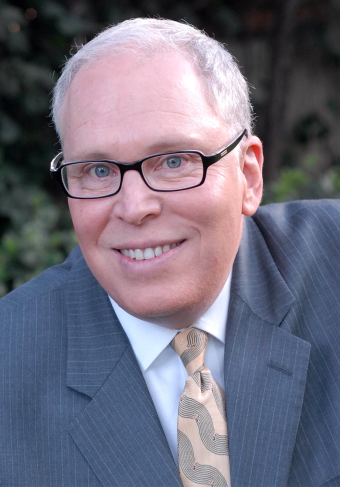
Applied Genetics, Inc. (AGI) was founded in 1985 in Freeport, NY, by Dan Yarosh, whose Long Island roots are both scientific and personal. Dan did a postdoc at Brookhaven National Laboratory in the late 1970s, during which he pursued his interest in the field of DNA repair. During this time he also met his wife, Karen, who is from Merrick. Dan’s work on DNA repair had already sparked his interest in a rare genetic disease, xeroderma pigmentosum, which involves defects in the body’s DNA repair mechanisms. He planned to develop a drug that would benefit people with xeroderma pigmentosum, but in the end frustration with the federal regulatory apparatus around drug development led him to go in a different direction.
The story of AGI draws together three narrative strands that we’ll see again and again in the story of biotechnology on Long Island: a local connection, either personal or professional or both; the development of a particular scientific problem through research at a local institution; and elements that have to do with the state of American science and commerce on a larger scale, in this case, the regulatory apparatus for cosmetics and drugs.
First, the personal story. Dan was born in Akron, Ohio, in 1954. There were a lot of scientifically minded people in his family. His mother was a child psychologist, his father a computer scientist, and his older brother studied physics in college, later going on to law school. The family moved frequently due to Dan’s father’s work. For several years in the early 1960s, they lived in southern California. Dan’s experiences there would turn out to be important for his later career in biology: a central element of his research would have to do with how UV light damages skin and how the body normally repairs the damage.
Dan tells the story himself:
Dan Yarosh, interviewed on May 23, 2023
Place: Rare Books Room, Carnegie Library, CSHL
Interviewer: Antoinette Sutto
Antoinette: In your bio here, it mentions that you had experienced sun and surfer culture in California and this need for sun protection. That was important later in your career.
Dan: Yes. Sunscreens did not become available till 1975. This is the early ’60s, and in Southern California, the Beatles and the Beach Boys, especially the Beach Boys were the dominant culture, and everybody went to the beach. I went to the beach and got horrific sunburns and lay in bed and cried and cried and cried. I still obviously remember the sun worshipping and the lack of protection.
Antoinette: The thing with putting zinc on your nose. I remember back– I was a child in the ’80s and early ’90s and I remember the neon zinc things like this cream that was like in hot pink or neon green and people would put that on their nose. How effective are those things?
Dan: Yes, they’re very effective because they’re opaque, so no sunburn, it’s just your nose. The nose, of course, is tremendously exposed because you’ve got to think about how the sun looks down on you and your nose is sticking out, but as sun protection, it’s okay, but it’s minor. I mean, as a compound, it’s fantastic. You paint yourself white, you’re not going to get sunburned.
Antoinette: You’re going to be reflective.
Dan: [laughs] Reflective.
Antoinette: Not super practical.
Daniel: In those days, it was a style of a really hip, cool person who was blonde-haired, and the zinc on the nose, it meant they were a surfer. It was more a badge than a sun protection strategy.
In the 1960s, in other words, plenty of people were getting a lot of sun and there was no good way to avoid skin damage from sun exposure. There were a handful of commercial sun protection products on the market back then, but they were not particularly effective and not widely used. The widespread availability of effective sunscreens came later on, in the 1970s and 1980s.
This brings us to the second element of the story, the development of a scientific problem. In this case, the problem was DNA repair — the precise processes through which DNA damage occurs and the specific physical and chemical tools that the body has at its disposal to repair it. As a young molecular biology PhD, Dan was intrigued by this problem and so was thrilled to get a NSF postdoctoral fellowship to work with Richard (Dick) Setlow at Brookhaven National Laboratory in the late 1970s. Setlow’s lab was one of the leaders in the field in terms of DNA repair research.
Although UV light and its effects would ultimately become central to Dan’s career in biotech, at the time his focus was primarily on “what damages DNA and how does it get fixed. UV is one [way], but we were [also] very interested in chemical damage to DNA.” The research, as Dan, Dick Setlow, and their colleagues saw it then had two primary applications. The first was preventing cancers caused by UV light (skin cancers) and cancers caused by exposure to carcinogens in the environment. The other was chemotherapy — if researchers could discover how the DNA repair process worked, they might also be able to figure out how to interrupt it. Chemotherapy damages cancer cells, and ideally doctors want to keep these damaged cancer cells from repairing themselves, so that they cease to reproduce. But whether you want to encourage or discourage DNA repair, you first need to figure out how it works.
Long Island Scientists: Dick Setlow
Dick Setlow was an important figure in the history of the life sciences at Brookhaven National Laboratory. He earned his Ph.D. from Yale in 1947 and worked as a biophysicist at Oak Ridge National Laboratory (1961-1974) before coming to Brookhaven in 1974. In 1979 he was named chair of the biology department. In collaboration with colleagues, Setlow “discovered that DNA defects caused by ultraviolet light lead to biological damage. He also showed that cellular enzymes could repair these defects in normal bacterial cells and his groundbreaking research led to much interest in the topic, because some genetic diseases and cancers can develop from deficiencies in DNA repair” (Source: Brookhaven obituary of Setlow). Specifically, as Dan explained, Setlow “was among the first to identify thymine dimers.” Thymine dimers are a type of molecular lesion in which an incoming UV photon “causes two consecutive bases on one strand to bind together, destroying the normal base-pairing double-strand structure in that area” (Source: Wikipedia). In the early 1960s, roughly at the time that young Dan was getting burned at the beach in California, Setlow “developed a chromatographic technique to measure them,” identifying the concrete photochemistry, “the thing you could hold in your hand,” for how UV light caused DNA damage. This work was and is considered very significant.

Setlow did important work on nucleotide excision repair, one of the processes that the body has in its toolkit to repair damage in DNA. Key to understanding this process was research on an inherited genetic disease, xeroderma pigmentosum, in which defects in several different genes prevent nucleotide excision repair from being carried out. Skin cells damaged by completely normal exposure to UV light accumulate abnormalities in their DNA — abnormalities which the body would otherwise repair — and the cells die or become cancerous. On average, about one person in a million is born with this disease. The effects of exposure to even minimal sunlight on people with xeroderma pigmentosum (XP) are devastating. Without protective measures, about fifty percent of those with XP will develop skin cancer by the age of ten.
By the 1960s, the big name in xeroderma pigmentosum (XP) research was James Cleaver, at the University of California, San Francisco. Cleaver was the first to realize that XP involved an inherited defect in nucleotide excision repair. The work of Setlow and his team on this problem complemented that of Cleaver’s lab, “nailing down,” as Dan put it, important technical aspects of how, specifically, the nucleotide excision repair process was failing to function in XP patients. There was a lively professional rivalry between the two labs by the late 1970s, and when Setlow’s lab “sent a paper to be published and we got scathing reviews,” they joked that “it was Jim Cleaver. His laboratory was the one torpedoing us.”
XP and DNA Repair
For more information on Cleaver’s work and on the development of research on XP and what it tells us about mammalian DNA repair, consult his 1968 paper, in which he published his discovery about the cause of xeroderma pigmentosum. Or you can watch this lecture by leading XP researcher Ken Kraemer. Kraemer and his colleague John DiGiovanni also published this review of decades of scientific work on XP in 2014.
But what specifically was Dan working on in Setlow’s lab at Brookhaven in the late 1970s?
Dan Yarosh, interviewed on May 23, 2023
Place: Rare Books Room, Carnegie Library, CSHL
Interviewer: Antoinette Sutto
Daniel: I came to Dick’s laboratory to do one particular thing, which at the time seemed off the wall, which was to take a bacterial enzyme and repair mammalian DNA. Right now, that seems trivial. At the time, when we had a bet at the laboratory and everybody put money down, 50% of the people in the lab said it couldn’t be done.
Antoinette: Back in the ’70s, it was still unclear whether you could clone mammalian DNA in bacterial cells. People had these questions about like– [crosstalk].
Daniel: Oh, yes, there was no cloning. You had to purify the bacterial enzyme and then you had to get it into the cell somehow.
Antoinette: That question of whether mammalian DNA and bacterial DNA would even be compatible, could you use one to do things to the other? It was unclear —
Daniel: Oh, yes, absolutely. People would have said, “No, you can’t express bacterial DNA.” We just didn’t know enough. Then the idea that a bacterial enzyme would work on human DNA or mammalian DNA, how does it know how to do that? There’s their histones– no, it’s never going to work. The project that I proposed, I had a National Science Foundation postdoctoral fellowship to work in Dick’s lab. Maybe that’s another reason why he liked me, because I brought my own money. [chuckles] In 1975, these Japanese researchers had taken T4 Endonuclease V, which is the DNA repair enzyme in bacteriophage T4. After all, that’s what I did my graduate work on.
Antoinette: That’s the one you used in your later research for the, it’s in the Lancet paper. It’s the same–
Daniel: Yes. This came much later and this was a cloned enzyme. They purified the enzyme from bacterial-infected cells. Then they used a virus called the Sendai virus, which causes membrane fusion. They put the Sendai virus and the purified DNA repair enzyme on human cells. They could show that they could get the bacteriophage enzyme into human cells, and it would cut the DNA.
Antoinette: This was a team from Japan?
Daniel: Yes. And that [makes ‘mind blown’ sound]. And so I thought I would do this with gentler methods because no one is going to put Sendai virus on their skin. That’s just not going to work. Are there other methods? Dick Setlow and Betsy Sutherland at the time had an idea to use polyethylene glycol to temporarily permeabilize cells. They would be permeable and then they would reform and they would go on to live. You had a window to sneak an enzyme in.
Antoinette: That was Setlow. Who was the other one?
Daniel: Betsy Sutherland.
Antoinette: Betsy Sutherland, okay.
Daniel: She was a senior scientist in the group and her expertise was photo reactivation, which is another DNA repair method, one that’s only found in plants. It absorbs light and uses the light energy to reverse a dimer. She was trying to get that photo-reactivating enzyme into cells using polyethylene glycol. What I did was purify an enzyme from Micrococcus luteus, which is this– the enzyme acted the same way as bacteriophage T4.
Dick Setlow was using it as a reagent and I wanted to see if we could get it into mammalian cells. That’s what my postdoc project was then. We were able to get it in. It was a mind-blowing experience. Get it in and it would incise. It was hamster CHO cells. It wasn’t human cells, too hard to grow. That was a huge moment in my career, to get something to work.
Antoinette: It was like a two-part challenge; getting the stuff into the cells, and then this question of, once it’s in there, is it going to do what we want it to do? In both cases–
Daniel: There was a third part to it that made much more importance later in my career. I had to purify the DNA repair enzyme. So I learned industrial purification, how to make stuff. Not just what was the scientific application, but how do you make the tools? You couldn’t go buy this enzyme.
In other words, when he came to Brookhaven to work with Setlow, Dan was working on a problem closely related to some of the big questions in the life sciences in the 1970s. The technique for creating recombinant DNA molecules, i.e. DNA strands that were pieced together from several different sources, had been developed less than a decade before. Scientists and industry specialists were coming up with all kinds of potential uses for this technology, including ideas like using bacterial cells to produce human proteins en masse, as the pharmaceutical company Eli Lilly eventually did in the early 1980s with insulin. But at the time, there were still a lot of open questions about what this technology could do and what it could not. Was the biochemistry the same across different types of organisms — could you get the genetic machinery of a bacterium to express a mammalian protein, for example?
Dan’s goal in Setlow’s lab was very specific. He wanted to use a bacterial enzyme to repair mammalian DNA. Today, in 2023, we know that this can be done — as he says, “it seems trivial” now. But at the time, it was not at all clear that you could do this.
The challenge had three parts. The first was purifying the bacterial repair enzyme that he planned to introduce into mammalian cells. In the late 1970s, you couldn’t just order whatever enzyme you might need. Dan had to make the enzyme himself, which (see below) turned out to be important for his later career in biotechnology.
The second step was getting the bacterial repair enzyme into mammalian cells. Other researchers worldwide at that time were working on the same problem, and a team in Japan had succeeded in using Sendai virus (now known as murine respirovirus) to move a bacteriophage repair enzyme (T4 endonuclease V) into cultured human cells, and they could show that the enzyme worked, which was step three.
But given that one of the potential applications of this research was a treatment for people with DNA repair diseases like xeroderma pigmentosum, there was one obvious problem with the method that the team in Japan had used. As Dan points out, “no one is going to put Sendai virus on their skin.” So he and his colleagues decided to come up with another way to get the repair enzyme into mammalian cells.
Setlow and another BNL colleague, Betsy Sutherland, came up with the idea of using propylene glycol to make cells temporarily permeable, creating a “window to sneak an enzyme in.” Using this propylene glycol method, Dan was able to move an enzyme from the bacteria Micrococcus luteus, which acted in the same way as the bacteriophage repair enzyme, into mammalian cells, in this case hamster cells. Getting this to work, Dan recalls, was “a mind-blowing experience,” and “a huge point in my career.”
Long Island Scientists: Betsy Sutherland
Betsy Sutherland earned her Ph.D. in radiation biology in 1967. She worked as a biochemist at Brookhaven National Laboratory for several decades. Her research focused on DNA repair in plants. BNL’s research program had included work on radiation’s effects on plant genetics from the time the lab was founded in the late 1940s. For more about Sutherland, see her bio at her undergraduate alma mater, University of Tennessee Knoxville. For more information about radiation biology at Brookhaven during the Cold War, see our exhibition on plant science, genetics and agriculture on Long Island.
This successful experiment brings us to the third part of the story, which is how you go from a postdoc working on DNA repair at Brookhaven to the owner of a biotech company, Applied Genetics, marketing the result of years of DNA repair research — but marketing it not as a drug, but as a cosmetic product to prevent sunburn.
Several aspects of how science worked in the United States in the 1970s and 1980s played into how the story unfolded. The first of these was the nature of scientific funding. Then as now, the success of a scientific career depends upon the researcher’s ability to get grants. Dan was at a disadvantage here because he had done his postdoc Brookhaven, a national laboratory, which had meant that he had not needed to apply for any research grants. Indeed, as federal employees, BNL scientists were not allowed to apply for grants. And after that, he had worked at the National Cancer Institute in Bethesda, Md., and in this case, too, he had not needed to apply for research funds. But a track record of getting money was and is very important in the hiring process. Dan was interviewing at medical schools for positions as a professor of biochemistry or molecular biology, but because he didn’t have a history of bringing in money, his CV “would go to the bottom.”
Alongside this was a personal reason. During his postdoc at BNL he had met his wife, Karen, who had grown up Merrick, and her family was anxious for the couple to return to Long Island. As anyone who has sought an academic job in the past forty years can tell you, geographical limitations can put a serious damper on your search. Dan did receive an offer from Hunter College, in Manhattan, but the commute there from Merrick — almost an hour on the Long Island Rail Road and then another forty-five minutes on the subway — was prohibitive. “Everybody said, ‘you’re crazy.'”
The desire to return to Long Island, and the difficulty of finding an academic job in the region, pushed Dan toward the idea of founding a biotechnology company. His father-in-law, William Doninger, played an important supportive role in this process. William owned a metal manufacturing company that produced, among other things, mailboxes for the lobbies of post offices.
In addition to a significant financial investment in Applied Genetics, William provided Dan and his colleagues with space to work in his company’s building, including skilled accounting, legal and secretarial help. As Dan put it, it “was like a mini incubator for one company.” Dan also got some (moderately) skilled technical assistance in the form of his young nephew Brian, who at ten years old got to go to the lab with his uncle on Saturday mornings, put on a lab coat, and help purify DNA. Applied Genetics also got significant funding in the form of the then relatively new federal SBIR (Small Business Innovation Research) grants. But the “incubator” role played by Doninger Metal Products — a pretty unlikely actor for the part — was crucial.
Dan was on his way to a successful company. But a company that produced what, exactly? To explain the business model of Applied Genetics, it’s necessary to jump backward briefly to Dan’s time working at BNL, and later for the NIH in Bethesda. When he was at Brookhaven doing his experiment introducing a bacteriophage DNA repair enzyme into mammalian cells, he had had to purify the enzyme himself — it wasn’t something you could just go out and buy. In general, this was true for a lot of reagents and enzymes back then, including many things that you can simply order from a catalog now.
Dan Yarosh, interviewed on May 23, 2023
Place: Rare Books Room, Carnegie Library, CSHL
Interviewer: Antoinette Sutto
Antoinette: People mostly made their own reagents and enzymes back then, right?
Daniel: Yes, well, that’s a big part of what I learned. One of the reasons that I started the company is I saw when I went in, this is after Brookhaven, I went to the National Cancer Institute, people would walk around the laboratories of the National Cancer Institute with an ice bucket, and sell enzymes out of the ice bucket to the researchers. This is how Bethesda Research Lab, BRL–
Antoinette: They sell little glass containers of enzymes.
Daniel: Little Eppendorf tubes of enzymes, and they come to you guys. These were restriction enzymes, cloning-
Antoinette: Like people selling beers at a baseball game, like, “Here’s–“
Daniel: Yes. I had someone say, “Got any Hind III?” “Well, no, Fred just bought my last two.” “He did?” “Fred, Fred, Fred!” [laughs] Stuff like that. I saw how you could be an entrepreneur if you could make a reagent that people wanted. Actually, when I started my company, the first thing we did was make reagents. Going back, one of the things I learned at Brookhaven was how to make enzymes in industrial, well, in research quantities. Not just for me, but for the entire laboratory.
This experience was reinforced when he went to work for the NIH. People were producing and selling small amounts of enzymes that researchers wanted — literally walking the halls with Eppendorf tubes of enzymes in a bucket of ice and selling them like snacks at a baseball game. Dan describes how he “saw how you could be an entrepreneur if you could make a reagent that people wanted.”
Specifically, he wanted to develop the DNA repair enzyme he had been working with into a marketable product. Initially, his goal was a drug for XP patients, a topical cream, Dimericine, which contained the T4 endonuclease V enzyme (often abbreviated T4N5, the DNA repair enzyme derived from bacteriophage, which Dan had shown as a postdoc worked in mammalian cells too). The cream would give XP patients’ cells the tool they lacked to repair DNA damage, thus reducing or preventing the skin cancers that XP patients are vulnerable to.
They made considerable progress developing the drug, including the publication of a study in the Lancet in 2001 that argued for its effectiveness in reducing the incidence of skin cancers in XP patients.
But they ran into problems not because of anything specific to their research, or the company’s location on Long Island, but because of how drugs are evaluated and approved by the FDA. The Lancet paper demonstrated that the cream containing the T4N5 DNA repair enzyme had promise as a treatment for UV skin damage in XP patients. But AGI “didn’t have a good relationship with the FDA. Some of it was on their side. Some of it was our naïveté.” The FDA, Dan recalls, was “very skeptical of biotech and they definitely believed that we were not in this for the XP patients, that we were going to get it approved for XP and sell it off-label to the general population.”
As a result, the FDA requested safety studies on very large numbers of people. This proved difficult because XP is an extremely rare genetic disorder, and according to the NIH, the number of known XP patients in the United States is less than 5000, in a population of over 330 million. What the FDA requested was effectively studies on “more people than there were patients.” The other challenge was that such studies are expensive, and in the course of trying to raise venture capital funding for this stage of the process, things moved in a different direction.
After all, there was a potential cosmetic application for a cream with a DNA repair enzyme. Very few people have xeroderma pigmentosum, but anyone can get sunburned. And by the 1990s and 2000s, people were far more conscious of the damage that excessive sun exposure and repeated sun burns could do to their skin than they had been just a few decades before. Moreover, marketing a product as a cosmetic requires a company to jump through far fewer hoops than getting it approved by the FDA as a drug, even if the technology in the product is extremely similar.
AGI already had a business relationship with a cosmetics company, Estée Lauder, for whom they were producing Photosomes®, which are microscopic chemical structures used to deliver the active substances of drugs or cosmetics.
Dan Yarosh, interviewed on May 23, 2023
Place: Rare Books Room, Carnegie Library, CSHL
Interviewer: Antoinette Sutto
Daniel: Oh, yes. Lots of people would come by and wonder what we were doing. In fact, my first connection to Estée Lauder was because of that. In the industrial park where we were down the road was a company that made plastic bottles for Estée Lauder. They were very interested in what we did. They’d come by.
Obviously, they saw the radioactive materials truck, but they always knew the factory as being metal manufacturing. Is it biology going on in there, what’s going on? The guy came and spoke with us and when he heard that I was making a cream for repairing DNA damage, he said, “Oh, my wife gets sunburn. Can you give me a little bit?”
He brought an Estée Lauder jar off the assembly line, said put some in there and I’ll bring it home and I gave him some. [laughs] Those were the old days. You just pull it off the line, put it in the jar, give it to the–
Antoinette: — and away it goes.
Daniel: He ended up making the introduction for us to Estée Lauder. That started my whole Estée Lauder connection.
The relationship with Estée Lauder came about partly through geography and partly through chance. AGI was located near a company that made plastic containers for Estée Lauder, and it was through this geographical proximity on Long Island and the personal connections that arose form it that AGI’s relationship with Estée Lauder began. The people at the company making plastic containers had seen trucks marked with the ‘radioactive materials’ going in and out of Doninger’s facility, but they knew the place as a metal manufacturing plant — what was going on? And so someone from the plastics company came over to chat, learned what Dan and his colleagues were doing, and then simply asked for a sample for his wife. He brought over an Estée Lauder container, and Dan gave him some of the cream.
AGI ended up making and another ingredient, Ultrasomes®, for Estée Lauder for a product of theirs, Advanced Night Repair. This ongoing business relationship proved important later, as Dan and his colleagues were searching for venture capitalism funding for trials of what they still hoped would become an FDA-approved drug. They spoke to the venture capital people at another cosmetics company, L’Oréal. Estée Lauder heard about this. Concerned that L’Oréal was going to end up with control of the drug delivery technology (the Ultrasomes) that they needed to produce Advanced Night Repair, Estée Lauder offered to buy AGI.
Estée Lauder’s purchase of the company brought about a change of direction for the drug, Dimericine, that Dan had been developing. Estée Lauder was a cosmetics company, not a pharmaceutical company, and they cancelled the drug application for Dimericine. They were still interested in the idea, however, and the product that ultimately emerged was similar although not identical. The active ingredient in Dimericine had been the T4N5 repair enzyme delivered in liposomes (a molecular skin delivery system). The active ingredient in the product for Estée Lauder was the same concept — a DNA repair enzyme in a molecular drug delivery packet — but the DNA repair enzyme was the Micrococcus luteus enzyme that Dan had made in Setlow’s lab, delivered in ultrasomes. Dimericine had been intended as a drug that would reduce the incidence of skin cancer in XP patients; ultimately, had it been approved by the FDA, it might also have been prescribed to other people to protect them against skin cancer. The Estée Lauder product did not make any anti-cancer claims, and the market for it was anyone who got a little too much sun at the beach or by the pool and wanted to avoid UV-related skin damage.
AGI, which began in a Brookhaven biology lab and a Freeport metal plant, was ultimately acquired by a cosmetics company, Estée Lauder. At first glance, the biotechnological product at the core of the company — a DNA repair enzyme and the technology to get it into human cells — might seem to have wandered a long way.
In a sense, it did — perhaps in the judgement of some people more than others. As we discuss in the Themes section of this exhibit, many scientists in the 1980s and even later were skeptical of the commercialization of research. And some that might have found drug development, especially for a rare disease like XP, valuable and scientifically respectable would have recoiled at the thought of taking a technology that could have an FDA-approved medicinal application and putting it into a cosmetic product.
But in another way, the DNA repair enzyme and its lipid packaging did not wander very far at all. Estée Lauder has had a presence on Long Island for over 50 years. More than that, it’s not just the technology acquired through the purchase of AGI that links this cosmetic company to biotechnological research on Long Island. Early in 2022, the company and Farmingdale State College announced that Estée Lauder would become the anchor tenant at the Broad Hollow Bioscience Park, where the company and the university plan to develop research collaborations and offer internships and other educational opportunities to students (Source: Long Island Business News, Feb. 10, 2022) The story of Dan’s DNA repair enzyme and its various pharmaceutical and commercial adventures, in other words, is very much a Long Island story, connecting some of the big questions in the history of science over the last 40 years to people, places and businesses right here on the island.
Find out more here about Dan’s current work as a technology advisor and luxury brand consultant on beauty, luxury goods, evolutionary biology and neuromarketing.